Backpacking the Black Canyon of the Yellowstone: 24.8 Miles from Hellroaring to Eagle Creek Campground
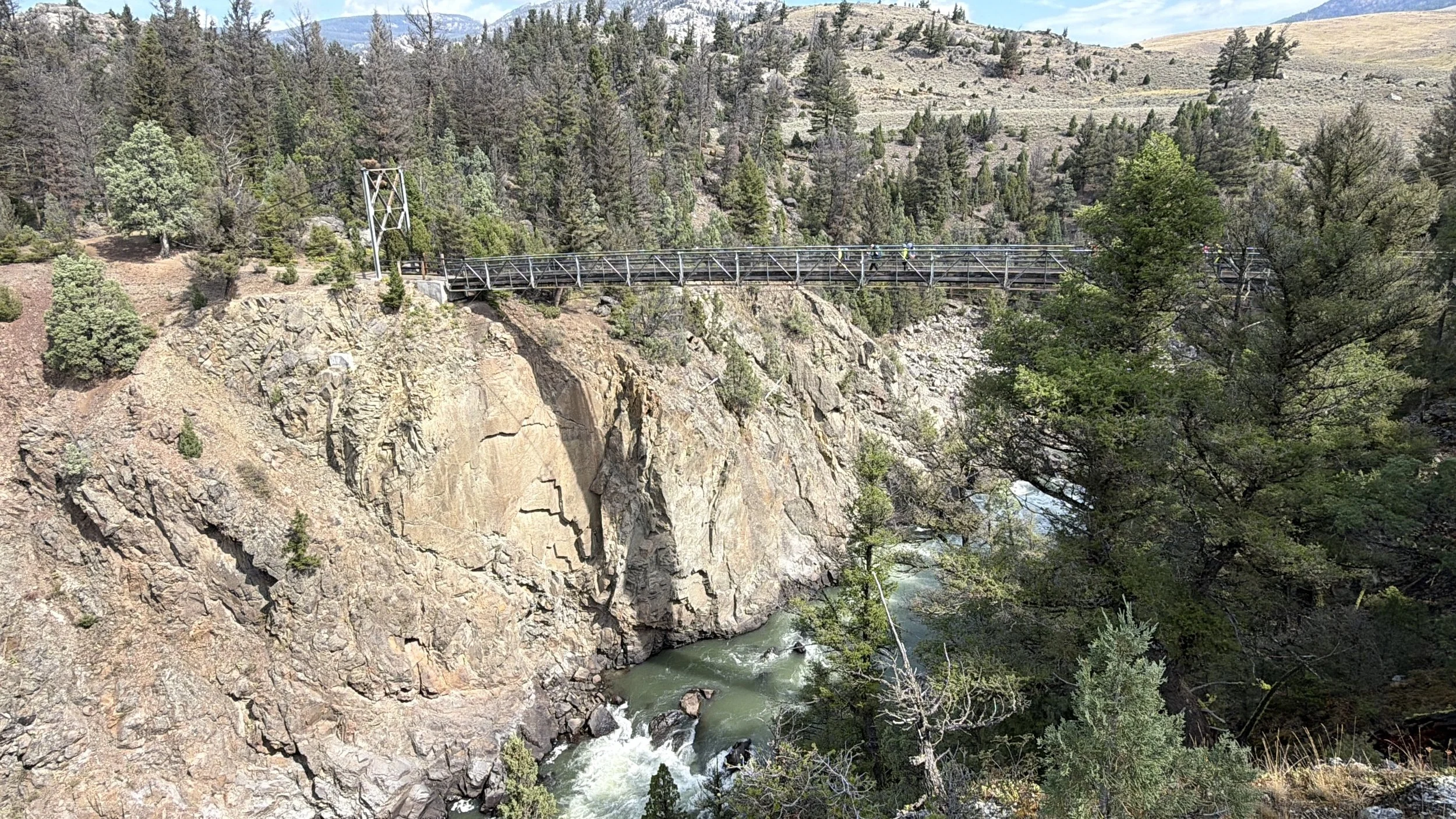
I spent more time thinking about the suspension bridge over Hellroaring Creek than almost anything else in the weeks leading up to this trip because I have always had a real fear of heights. The pictures I kept looking at made the crossing look narrow and exposed and I could already feel the bounce in my stomach every time I imagined stepping onto it. The possibility of running into a bear or stepping on a rattlesnake plus the heavy pack and four days of backpacking were all real, but that one bridge sat in the front of my mind and refused to leave no matter how many times I tried to push it aside.
We met the hiking guide at 8 in the morning at Eagle Creek Campground on a Saturday where we would be leaving our cars for 4 days. By 9 the shuttle had 7 of us, our gear plus our guide loaded up and rolling toward the trailhead. After about a 45 minute drive they dropped us at the Hellroaring trailhead where we hauled our packs out. Then the van simply drove away leaving us standing in the quiet with everything we were going to need already strapped to our backs. Mine weighed about 55 pounds and the moment the vehicle disappeared I felt every ounce of it settle onto my shoulders.
The first day surprised me more than I expected because the initial descent felt manageable and when I finally stepped onto the stock bridge it turned out to be built solid enough that the bounce only made me dizzy for a second or two. It was not windy that morning and the boards felt substantial under my feet so I walked across while a long breath I had been holding for weeks finally left my chest.
Later that afternoon we stopped for lunch beside the creek where we ate and waded in the cold water when a group of pronghorn drifted in to about thirty yards and simply watched us before a few of them got a drink from the river. We ended up seeing eight or ten of them during lunch.
That night at the first backcountry site along the river I already felt a little lighter than I had when we started.
Day two stretched longer than any of the others at over seven miles. That was when the trail finally got under my skin. The drop-offs showed up for real with steep downhill stretches that ran right along the edge of ledges you really did not want to look over. I stopped trying to take in the view and locked my eyes on the heels of the person walking in front of me so I could place my feet exactly where theirs had been without letting my mind wander to how far down it was. I never seriously considered turning around but I did tell the group that if anybody got hurt I would gladly chip in for a helicopter if I could ride it out with them.
Somewhere in the middle of that long day we had to swing wider off the main path to give a lone bison bull enough room and then find our way back onto the trail again. The afternoon rain arrived right around three o’clock the same way it had the day before, warm air and decent cloud cover giving way to the sky opening up like it had a schedule to keep.
Day three felt different the moment we started walking because we passed a half-eaten coyote lying right beside the trail and then came across big bison skeletons and a few elk skeletons resting ten or fifteen yards into the brush as if they had been there for years.
Moose scat appeared everywhere we looked, on the campsites and along the trail itself in places that made me stop and stare, even though I never actually saw a single moose the entire time.
Then the rattlesnakes showed up. Two of them on the edge of the path that slid away when we got close while the third one stayed coiled right in the middle of the trail near camp so we carefully stepped around it and kept moving with that low awareness that stays with you after something like that.
That night at camp the black sand across the river had some fresh hoof prints and the sky put on an electric storm that lit the canyon walls in sudden bright flashes while the rain came down hard.
The last day out was the hardest and forced us onto a detour because part of the trail is still washed out from the 2022 flood. That stretch turned out to be steep and slippery when my legs were already tired from everything that had come before.
Along the way we filtered every drop we drank from the Yellowstone River using LifeStraws and a gravity system. I took only a handful of photos. I mostly handed the camera work over to the guide so I could simply walk and look and feel the place instead of constantly trying to frame it.
I am proud that I finished the whole thing even though the ledges that started on day two never got comfortable. We continued to encounter them on day 3 and 4 and the pack never felt any lighter by the time we walked into Eagle Creek Campground. The northern range does something to you once you are out there. It looks open and simple from a distance, then suddenly you find yourself on a ledge watching someone else’s feet so you know where to step or carefully stepping around a coiled rattlesnake or realizing how much life has been moving through that canyon long before you ever showed up. I am glad I did it and look forward to getting out there again soon.